

Shark Research Monitoring Update

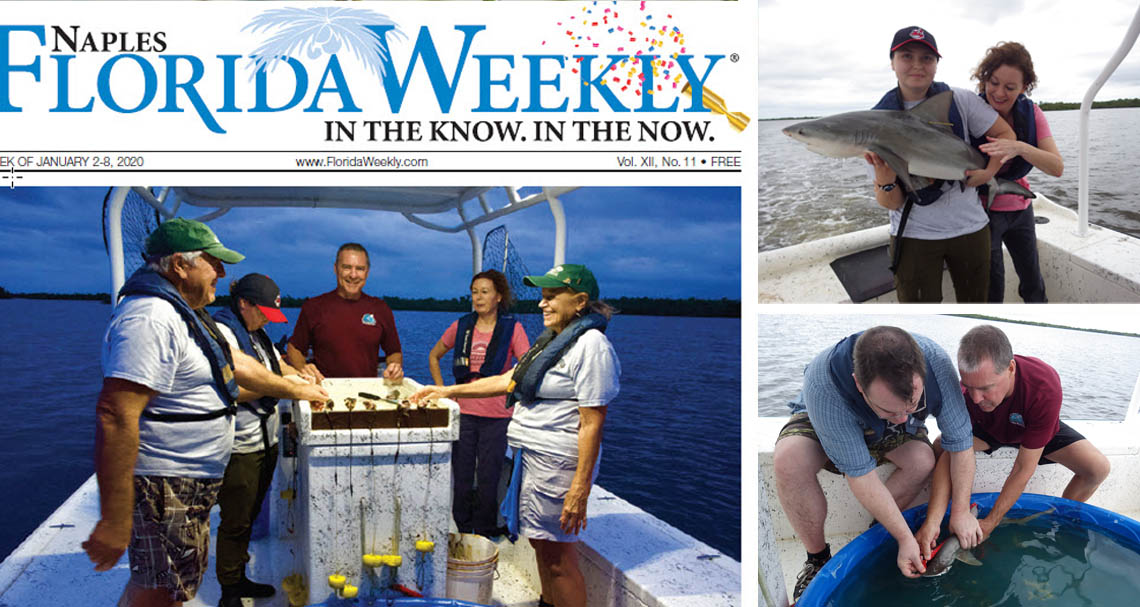
SharkingFisheries biologist Pat O’Donnell has been monitoring shark populations in the Rookery Bay National Estuarine Research Reserve since 2000. With eleven years of data and counting, O’Donnell compares the relative abundance of sharks in three very different bays of the Ten Thousand Islands on a monthly basis.

Using a combination of gill nets and long lines, O’Donnell’s study has consistently confirmed the presence (and absence) of juvenile bull, bonnethead, lemon, black tip and nurse sharks in the study area.


Scalloped HammerheadStudy turns up two new species
While long-term monitoring is generally not designed for making new discoveries, in July 2011 O’Donnell’s gear did reveal two new shark species not caught in his study ever before: scalloped hammerhead and Atlantic sharpnose. These two individuals were both caught in Fakahatchee Bay on the same night.


SharkingA collaborative effort
This ongoing monitoring program is also helping extend the reach of other studies. In 2006, O’Donnell began a cooperative effort with staff from the Florida Aquarium, Georgia Aquarium and Shedds Aquarium working to improve methods used for capturing and caring for sharks in captivity. Because O’Donnell was already handling sharks in the wild, it provided an excellent opportunity for them to simultaneously gather their data without interfering with or duplicating O’Donnell’s efforts.

Veterinarians and researchers from GA, FL and Shedd Aquariums (see paper title in press below) have been drawing blood from juvenile sharks captured in RBNERR’s shark nursery monitoring project. Blood gases are analyzed on board to help document capture stress effects in wild shark populations by looking at blood parameters such as lactate levels, ph, CO2 and others.

The new study is about to be published and is setting forth some new guiding principles for shark capture and handling in captivity. By analyzing blood samples drawn from sharks during capture, it is possible to determine how much stress the animals encounter by looking at pH and lactate levels. Preliminary conclusions reached in this study include the confirmation that bonnethead sharks are more sensitive to handling than most other species in the study, and sharks are generally less stressed when captured on longline as compared to gill net.

The study is entitled Assessment of acid–base derangements among bonnethead (Sphyrna tiburo), bull (Carcharhinus leucas), and lemon (Negaprion brevirostris) sharks from gillnet and longline capture and handling methods and authored by Michael W. Hyatt (Georgia Aquarium), Paul A. Anderson (The Florida Aquarium Center for Conservation), Patrick M. O'Donnell (RBNERR) and Ilze K. Berzins (John G. Shedd Aquarium).


Menu

Shark Research Pages

Read More Shark Research content:

Shark Research on TV

TV personality Jeff Corwin films segment for new show at Rookery Bay